What is Yin Yoga?
Yin yoga, a serene and meditative style of yoga, emphasises holding postures for extended periods to target the connective tissues, ligaments, and joints rather than focusing on the muscles. This practice, rooted in ancient Chinese Taoist traditions, contrasts with more dynamic yoga styles, offering a peaceful and introspective experience that is especially good for reducing stress, and calming the mind and body.
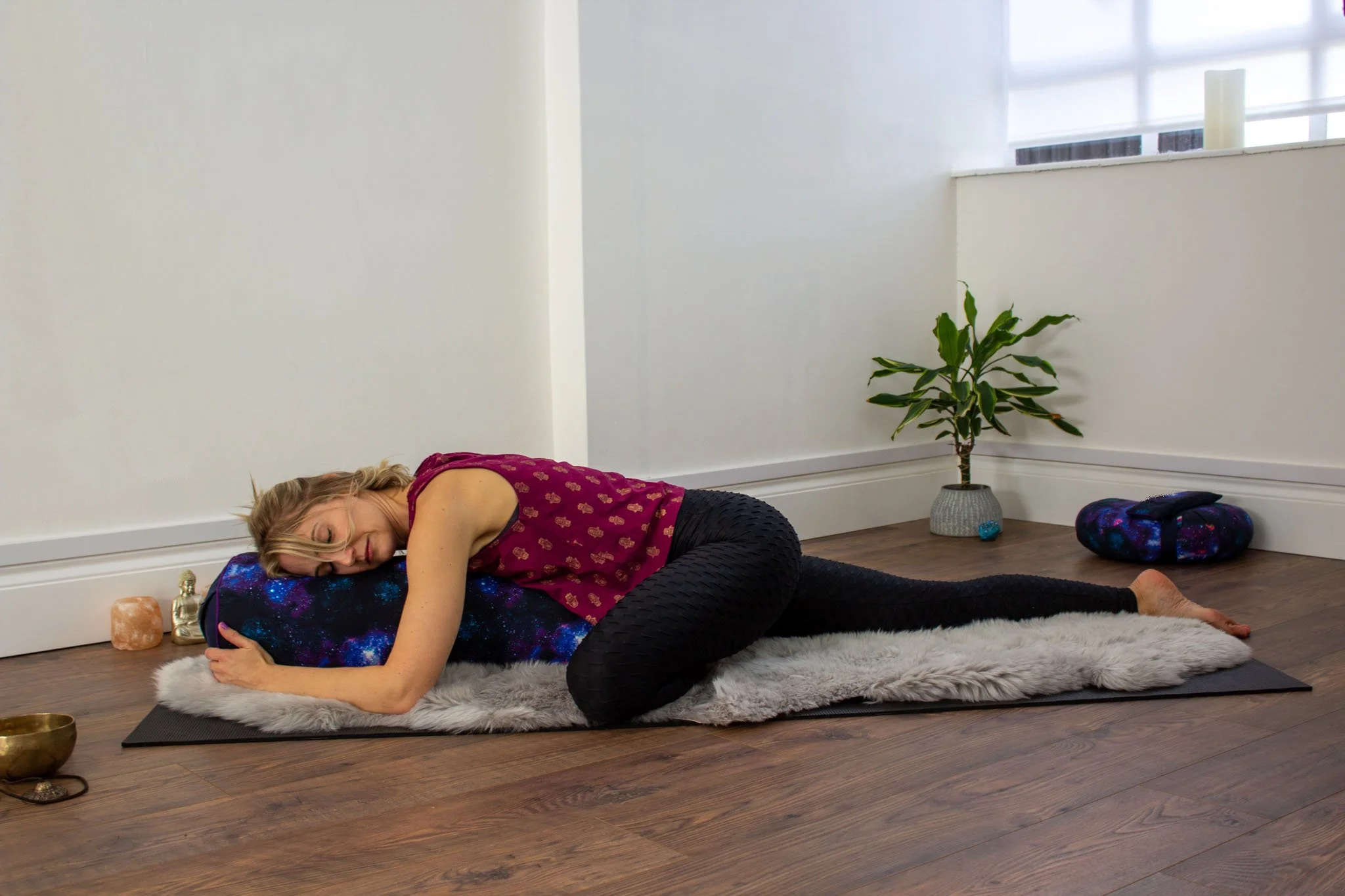
Yin yoga involves a series of passive, floor-based postures that are seated or reclined, typically held for three to five minutes, although some practitioners may hold poses for even longer. The essence of Yin yoga is to relax the muscles and allow gravity to facilitate a low intensity stretch. This extended hold time allows for deeper penetration into the connective tissues, enhancing flexibility and promoting joint health.
The practice incorporates principles of Traditional Chinese Medicine (TCM), focusing on stimulating the body's energy channels, or meridians. By applying gentle stress to the connective tissues, Yin yoga aims to increase circulation in the joints and improve the flow of qi (energy) throughout the body.
The Benefits of Yin Yoga
Enhanced Flexibility
One of the primary physical benefits of Yin yoga is improved flexibility. By holding poses for longer durations, the connective tissues are gently stretched, increasing their elasticity. Over time, this can lead to a greater range of motion and reduced stiffness in the body.
Joint Health
Yin yoga targets the joints and ligaments, promoting synovial fluid production and maintaining joint mobility. This practice is particularly beneficial for those with joint issues or arthritis, as it helps to keep the joints lubricated and healthy.
Stress Reduction
The slow, meditative nature of Yin yoga activates the parasympathetic nervous system, which is responsible for rest and relaxation. This can lead to a significant reduction in stress levels, promoting a sense of calm and well-being.
Improved Circulation
By applying gentle pressure to the connective tissues, Yin yoga enhances blood flow and circulation. This improved circulation can help to deliver oxygen and nutrients more efficiently to the body's tissues, aiding in overall health and healing.
Mindfulness and Meditation
Yin yoga encourages a meditative approach, inviting practitioners to focus on their breath and the sensations within their body. This mindfulness aspect can help to cultivate a deeper awareness and connection to oneself, promoting mental clarity and emotional stability.
Balancing Energy
In Traditional Chinese Medicine, the meridians correspond to different organs and emotional states. By targeting these energy channels, Yin yoga helps to balance the body's energy flow, potentially alleviating various physical and emotional imbalances.
principles of yin yoga
There are three main principles we apply in a yin practice; these all feed into the mindful practice and make it so unique.
FIND YOUR pose
Sometimes called your edge, we take time at the start of the pose to explore options and the use of props to find a version where you feel some sensation but not so much you cannot settle or there’s any pain.
Resolve to be still
Once you’ve found the right level of intensity it’s time to settle in to the pose, finding stillness and allowing the props to support the body.
Hold the shape
Once settled, we hold in the pose for a few minutes, usually 2-5 minutes.